
Preserving History, Architecture, and Legacy
The Watergate Complex in Washington, D.C., is renowned for two major contributions to 20th-century history—its role in the 1972 political scandal that reshaped American democracy and its status as a pioneering example of modern architecture and urban planning. The Watergate Museum, to be located within the Watergate Complex, is dedicated to educating visitors on both aspects of its history. Through carefully curated exhibits, historical artifacts, and expert-led programs, the Museum will bring the full story of Watergate to life—from its revolutionary design to the scandal that led to a presidential resignation.
A Masterpiece of Modern Architecture
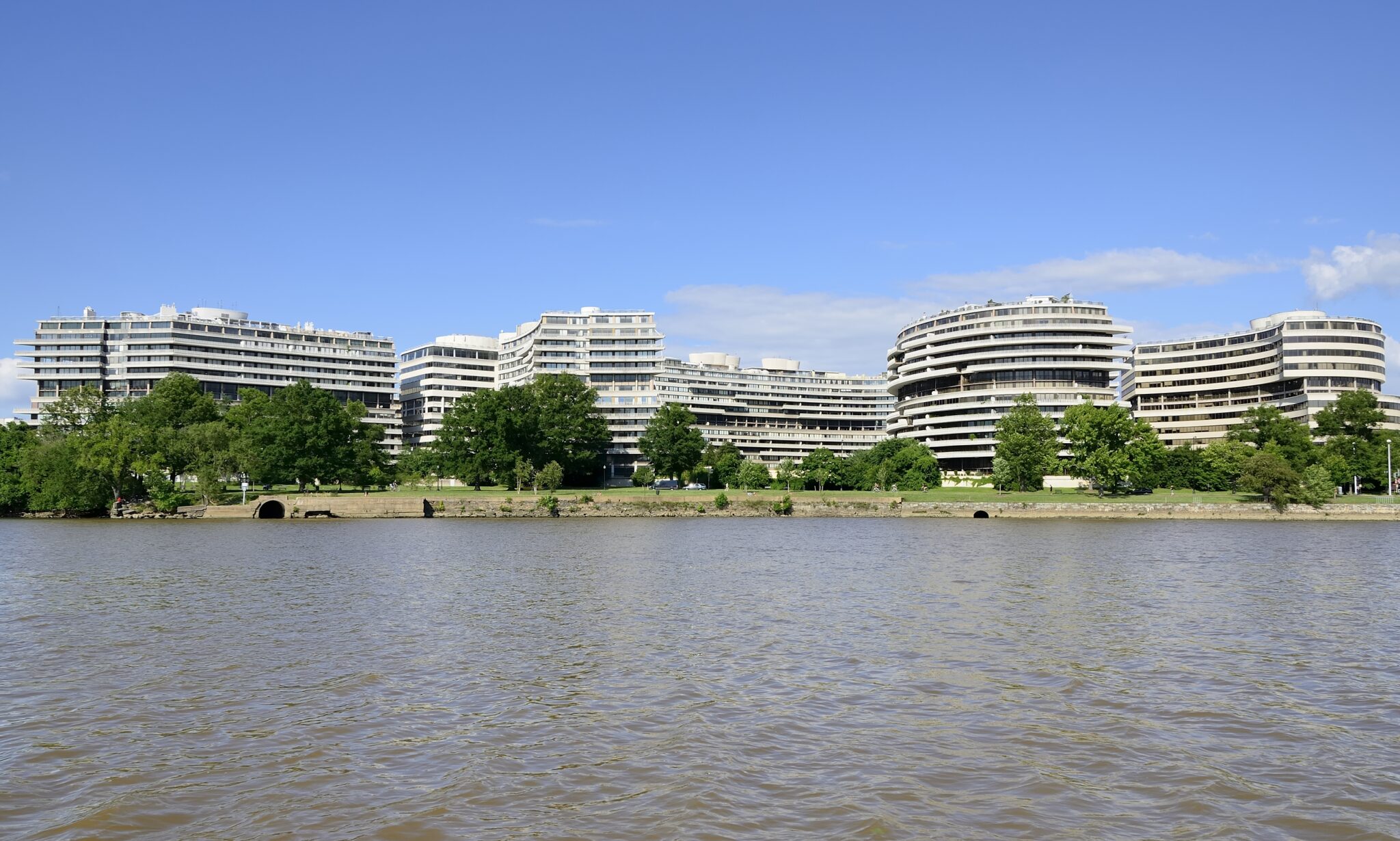
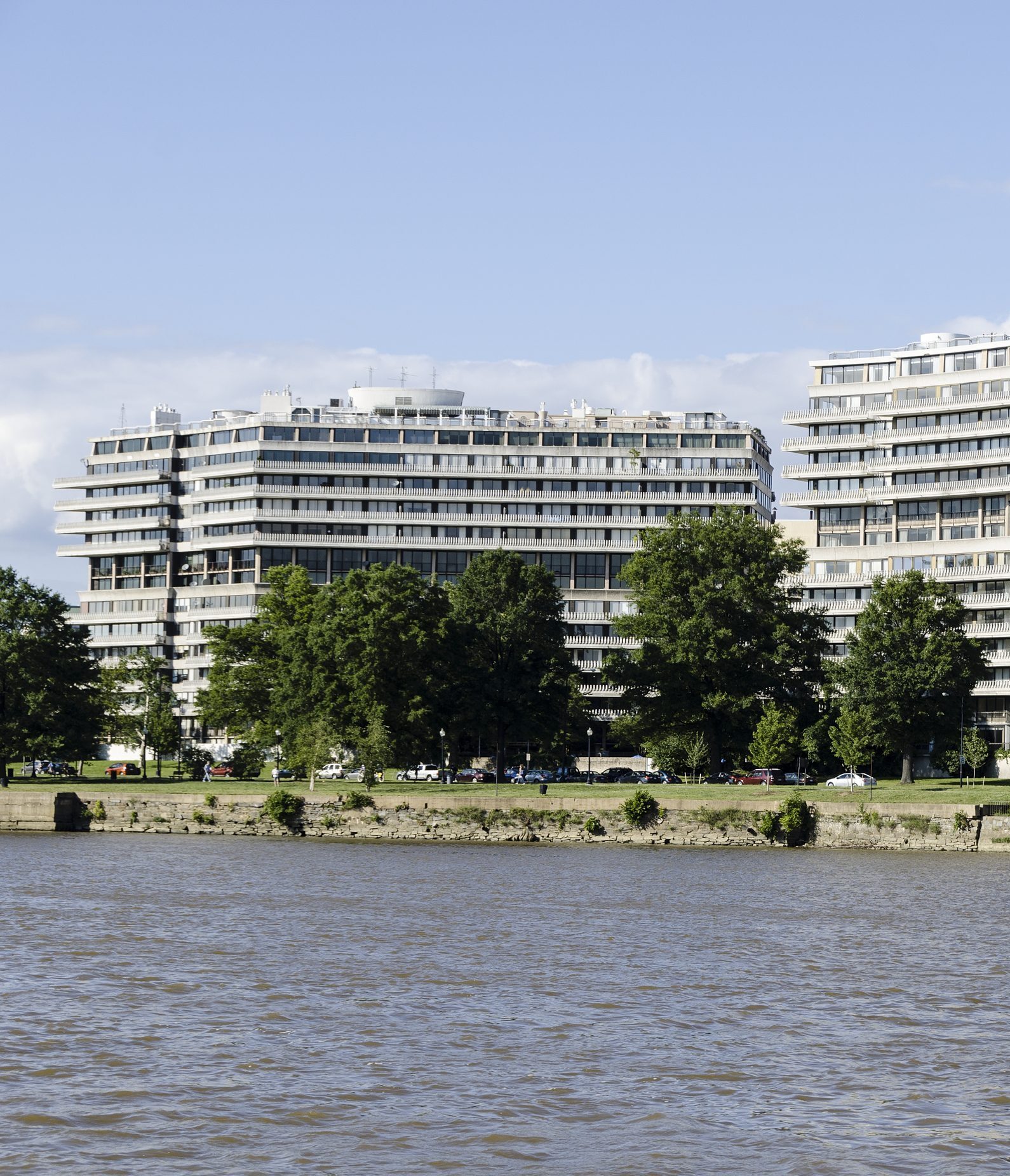
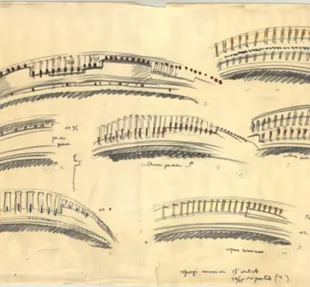
Designed by Italian modernist architect Luigi Moretti and commissioned by Società Generale Immobiliare, the Watergate Complex was one of America's first planned urban developments. It consists of:
- Three residential buildings
- Two commercial buildings
- A luxury hotel
- A retail plaza and landscaped gardens along the Potomac River
At its completion, the curved facades and innovative use of space made the Watergate an architectural landmark, standing in contrast to Washington, D.C.'s neoclassical buildings. Over time, it became one of the most prestigious addresses in the city, attracting diplomats, celebrities, and political figures.
The Scandal That Shook a Nation
In June 1972, the Watergate Complex gained global notoriety after a failed break-in at the Democratic National Committee headquarters, located within one of its office buildings. This event sparked one of the biggest political scandals in American history, leading to the resignation of President Richard Nixon.
The Watergate Museum will provide an in-depth look into the scandal, featuring:
Firsthand accounts & investigative journalism
Declassified documents & original recordings
Archival footage & interactive media
By exploring both the architectural legacy and political history of the Watergate Complex, the Museum will offer visitors a comprehensive, immersive experience that connects the past with the present.
The Watergate Museum Who We Are
The Watergate Museum is incorporated as a non-profit corporation under the laws of the District of Columbia and is designated as tax exempt under Section 501(c)3 of the Internal Revenue Code. It is governed by a five-member Board of Directors and guided by two advisory bodies. A Community Planning Committee composed of Watergate community residents provides local assistance to the Museum’s growth and operations. An Advisory Council, consisting of direct participants in the Watergate Complex’s early architectural and political past as well as scholars of its many elements, offers expert counsel.
Mission
The mission of the Watergate Museum is to present the architectural history of its distinctive and pathbreaking community and the history of the political events that originated there in 1972 and still give it notoriety today.
Board of Directors
Keith M. Krom
Director, Chair
James M. Banner
Jr., Director, Vice-Chair
Donna Barbisch
Director, Secretary
Michael K. Sheaffer
Director, Treasurer
Lisa-Joy Zgorski
Director
Arlene Pietranton
Director
Peggy Friedlander Theil
Director
Advisory Council
Richard Ben-Veniste
Chief, Watergate Task Force, Office of the Special Prosecutor, 1973-1975
Warren J. Cox
Co-Founder, Hartman-Cox Architects, Washington, DC
Edward A. Eigen
Senior Lecturer in the History of Landscape and Architecture, Harvard University Graduate School of Design
Beverly Gage
John Lewis Gaddis Professor of History, Yale University
Marc Lackritz
Assistant Counsel, United States Senate Watergate Committee, 1973-1974
Marco Mulazanni
Full Professor in the History of Architecture and Director of the Architecture Department, Ferrara University. Co-author, Luigi Moretti: Works and Writings
Timothy Naftali
Director, Richard Nixon Presidential Library and Museum, National Archives and Records Service, 2007-2011
Rick Perlstein
Historian and Journalist. Author, Nixonland
Adrian Sheppard
Professor Emeritus of Architecture, McGill University. Principal design assistant, Studio Luigi Moretti, 1961-1963
Jill Wine-Banks
Assistant Watergate Special Prosecutor, 1973-1975
Community Planning Committee
Susan Cooper
Judith Eaton
Jean Efron
Nancy Hicks
Kathy Kretman
Carl Landwehr
Jurate Landwehr
Ines Luengo de Krom
Mary Beth Ray
Bonnie Nelson Schwartz
John Schwieters
Susan Sherwin
Ann Williams
Gigi Winston
Discover Watergate History
The Museum will offer an unparalleled opportunity to explore the Watergate Complex's rich architectural history and its influence on modern urban design.